UI Packs
Sumi Progression Kit
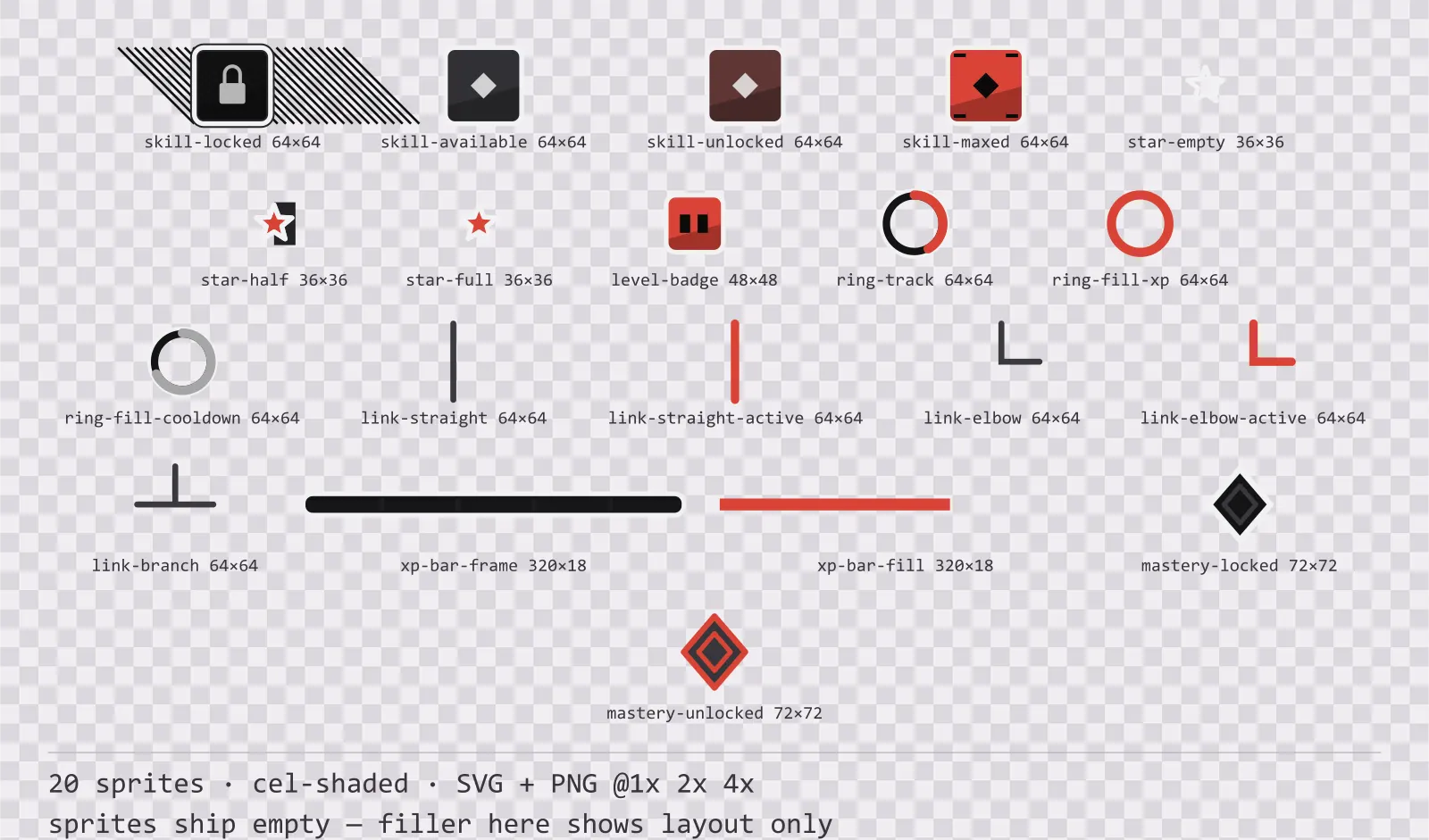
20 cel-shaded progression and reward components for dark interfaces — charcoal wash with seal red accents. SVG plus transparent PNG at 1x, 2x and 4x.
About this pack
Sumi Progression Kit is a set of 20 progression and reward components drawn in the cel-shaded style, where a thick ink outline wraps two flat tones split by a hard diagonal terminator. It contains four skill tree node states, straight, elbow and branch tree links in two states, a locked and an unlocked mastery node, empty, half and full rating stars, a level badge, an experience bar with tier ticks, an experience ring and an ability cooldown ring.
Progression screens are where state matters most and where colour is least reliable: a skill tree is already covered in ability art in every hue, so a node whose state is only a border colour is unreadable the moment it has an icon in it.
The shadow is a single hard-edged shape with no falloff — the defining property of cel shading, and the thing a gradient can never imitate. The outline uses the darkest tone in the palette rather than the border tone, or it reads as a thick grey frame instead of ink.
Inside that style this is the Sumi reading of it: a dark interface on a charcoal wash palette with seal red accents, built around two concentric frames, tab-shaped buttons at 120x48, glossy bars divided into 9 segments, and outlined icons on a 32px grid. Those measurements are why two families can share an art style without being interchangeable: the style decides how an edge is drawn, the numbers decide what the interface is for.
The tree links are the part that was missing for longest: a skill tree is not made of nodes but of the relationship between them, and without a connector drawn in the same style the developer ends up drawing their own line that does not match. Straight, elbow and branch cover a grid layout, and each comes dim and active — the active path is not just accent-coloured but thicker, because a skill screen is already full of coloured icons. The locked node is hatched, the maxed node carries four corner ticks, and the available node is simply the plain face — three states told by texture and count rather than by hue. The two rings share one geometry and differ only in fill direction and colour, so they line up when stacked.
Every sprite ships as an editable SVG and as transparent PNG at 1x, 2x and 4x, so you can drop the PNGs straight into an engine or open the vector and change a colour. Built to the same measurements as the rest of the Sumi family, which means this kit and the Sumi panel kit line up without either being resized. A good fit for cel-shaded and toon-rendered games.
Download
Direct link · no sign-up · no wait pageComplete set — SVG sources, PNG exports at 1x/2x/4x, licence and readme

How to use it
- Draw the ability icon inside the skill node, not over it; the node art leaves the centre clear for exactly that.
- Animate the cooldown ring by redrawing the arc rather than by rotating the sprite — the supplied frame is a static example at 68%.
- Stack three stars at the same size for a rating row; the half star exists so a 2.5 average does not have to round.
License
Creative Commons Attribution 4.0 — Free for commercial use. Credit required. Full terms · What this means in practice
"Sumi Progression Kit" by Oğuzhan Girgin, licensed under CC BY 4.0 — https://www.colorosse.com/assets/2d/ui/sumi-progression-kitAlso browse
More UI Packs
See all →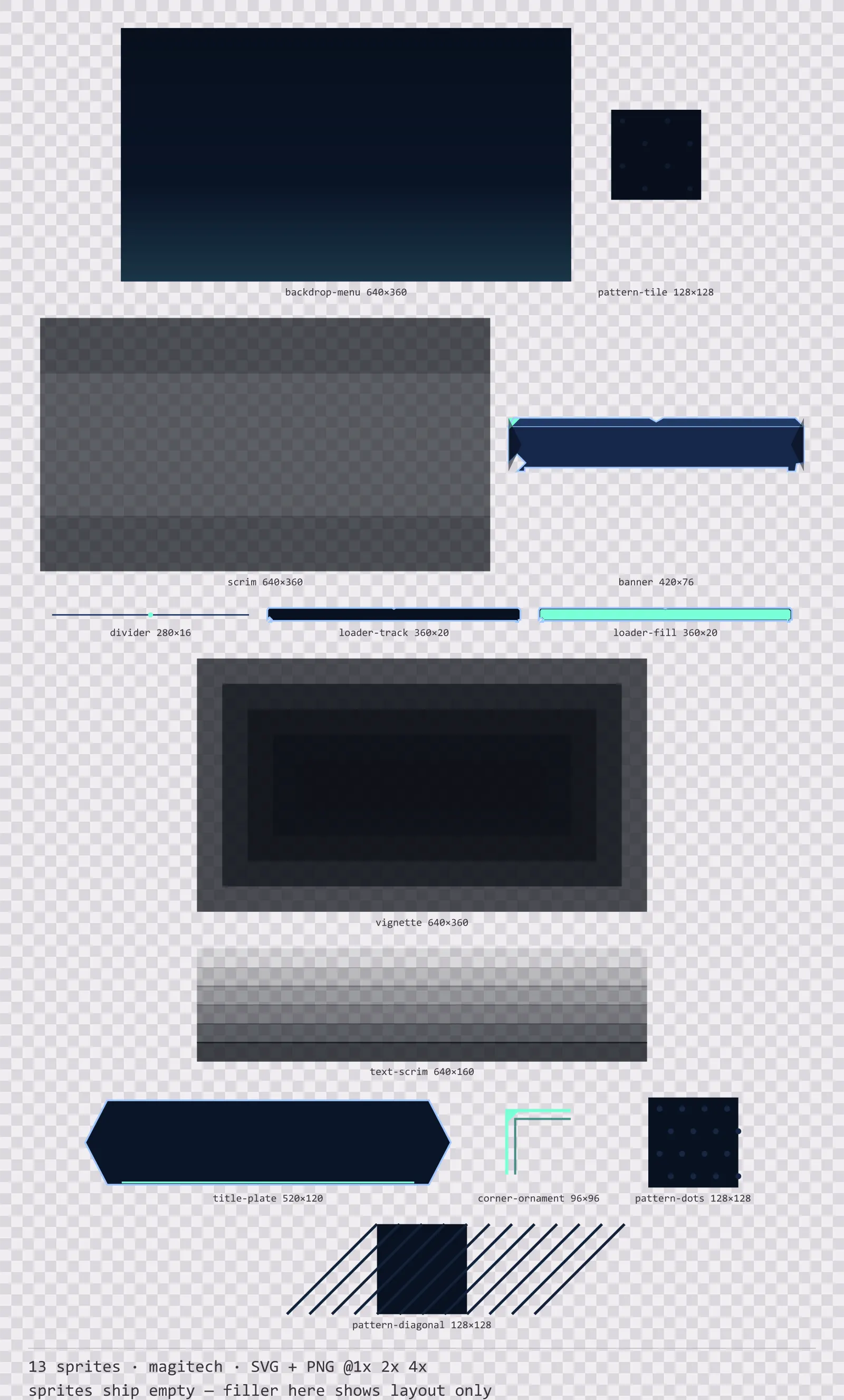
Aetherlab Backdrops
13 magitech background and overlay pieces for dark interfaces — lab navy with aether cyan accents. SVG plus transparent PNG at 1x, 2x and 4x.
Aetherlab Card Frames
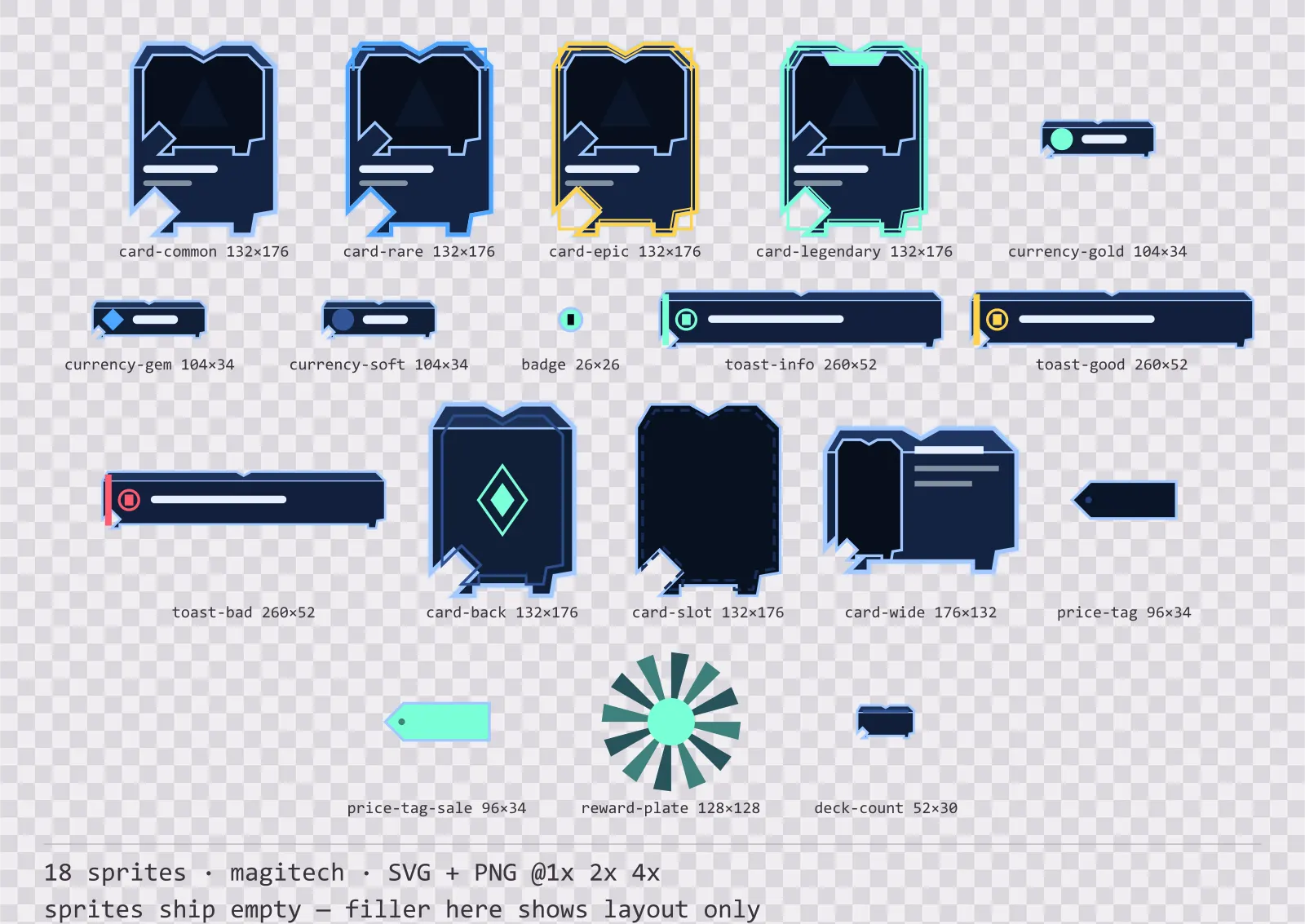
18 magitech card, currency and notification components for dark interfaces — lab navy with aether cyan accents. SVG plus transparent PNG at 1x, 2x and 4x.
Aetherlab Character Sheet
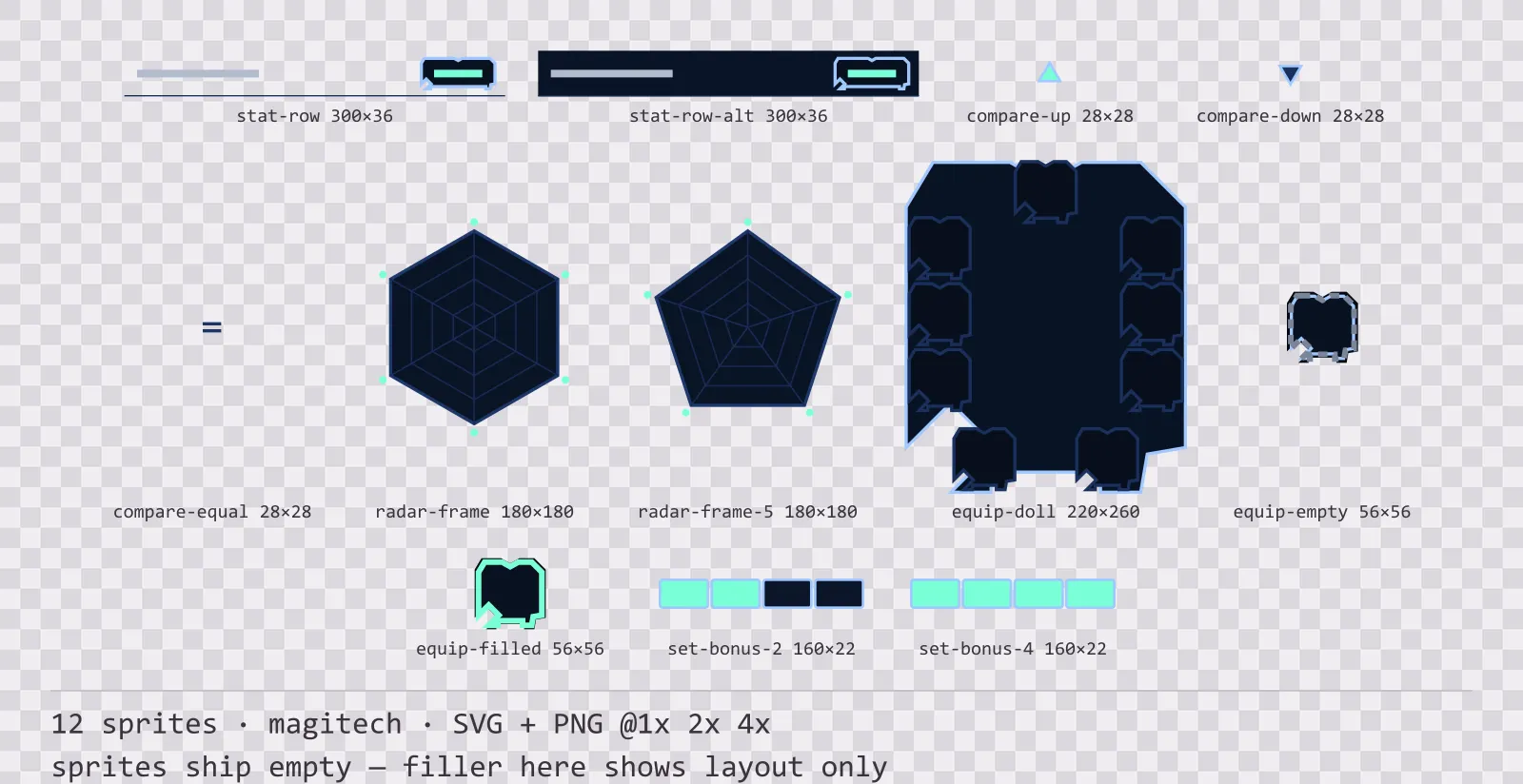
12 magitech character sheet and stat widgets for dark interfaces — lab navy with aether cyan accents. SVG plus transparent PNG at 1x, 2x and 4x.
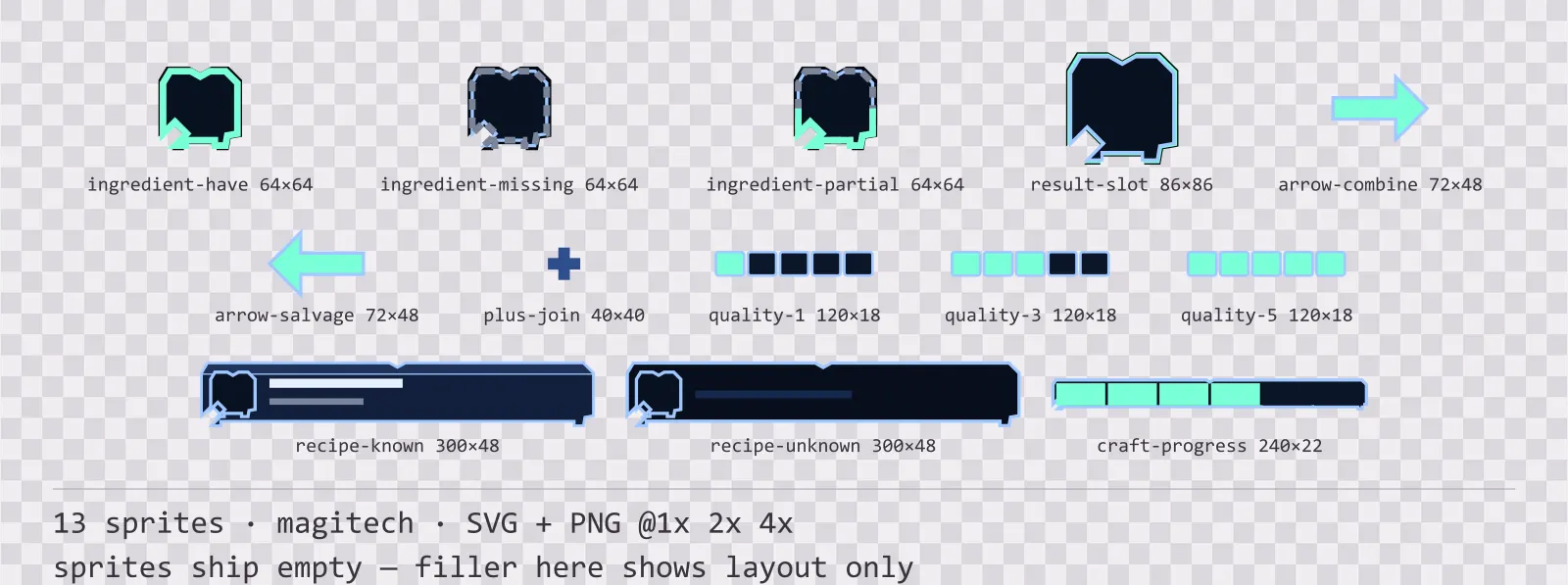
Aetherlab Crafting UI
13 magitech crafting and recipe widgets for dark interfaces — lab navy with aether cyan accents. SVG plus transparent PNG at 1x, 2x and 4x.